Starter
Highly digestible, concentrated nutrition with a particle size suited to fry and small fingerlings.
TILAPIA FEED & FEED-EXTRUSION TECHNOLOGY
Feed can represent 50–60% of an aquaculture farm’s operating expenditure. Big Fish Systems approaches nutrition, manufacturing equipment and farm performance as one connected process.
FEED FOR THE STAGE OF PRODUCTION
Fish change as they grow. Particle size, protein, energy, digestibility and feeding rate must be matched to the production stage and adjusted for biomass, temperature, dissolved oxygen, water quality and feeding response.
We therefore treat starter, grower and finisher feeds as distinct tools within the production plan—not simply three labels on the same product.
Highly digestible, concentrated nutrition with a particle size suited to fry and small fingerlings.
A balance of protein, energy, digestibility and pellet stability for efficient juvenile growth.
Controlled final growth, body condition, flesh quality and waste loading at a realistic feed cost.
THE COMPLETE MANUFACTURING CHAIN
Ingredient preparation, machine settings, heat, moisture, drying and storage all influence the pellet that reaches the fish.
Size, density, stability and moisture affect feeding behaviour, nutrient loss and water quality.
Manufacturing must protect protein, fat, vitamins and other heat-sensitive inclusions as far as practical.
Feed conversion, growth, waste output, health and fillet yield must be assessed together.
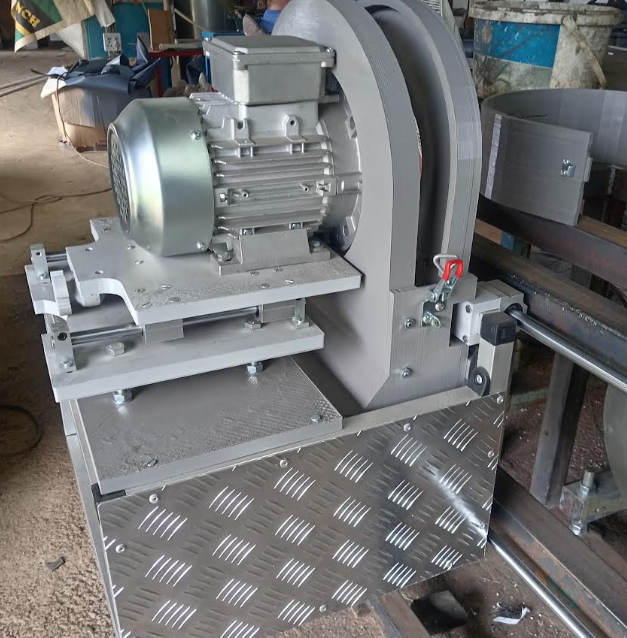
EXTRUSION MACHINERY UNDER DEVELOPMENT
The objective is not simply to build a machine that extrudes pellets. It is to create a practical platform that is simple to operate, energy-conscious, maintainable and capable of producing consistent feed from locally available ingredients.
Entry-scale production for smaller farms, trials and controlled in-house manufacture.
A larger unit intended for established farms, cooperatives and regional production.
A future higher-output platform for serious commercial feed manufacture.
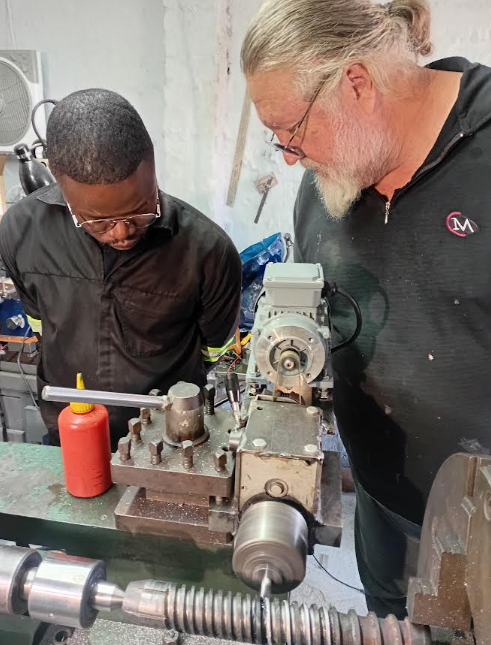
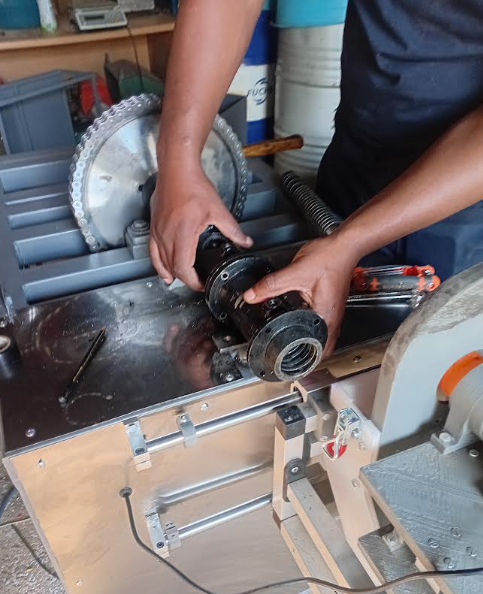
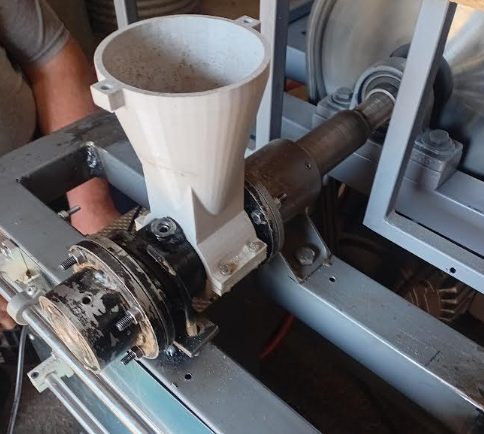
DESIGNED, MACHINED AND TESTED IN PRACTICE
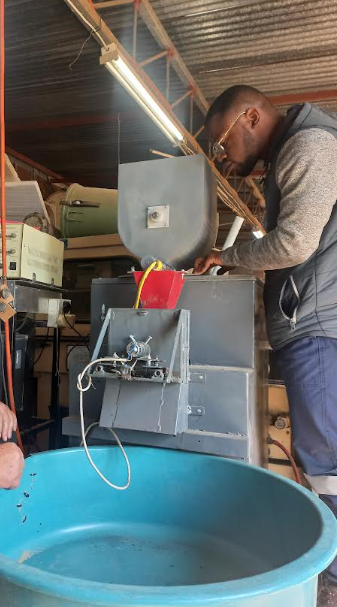
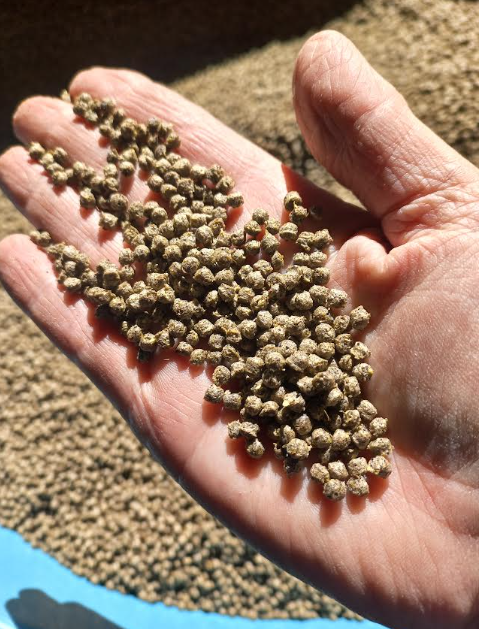
Prototype work links component design and workshop assembly directly to material flow, pellet formation and the quality of the test feed produced.
RESEARCH CONNECTED TO MANUFACTURING
Laboratory analysis and farm trials help connect what happens inside the extruder to what happens inside the tank.
Work involving Manchester Metropolitan University, the University of Johannesburg and Big Fish Systems has developed prototype manufacturing capability and practical engineering knowledge aimed at accessible African feed production.
Relevant evaluation may include amino-acid digestibility, pellet stability, moisture, nutrient retention, waste output, gut health, probiotic survival and fillet yield.
Controlled variants compare a basic feed, a basic feed with probiotics, and a premium blend with probiotics to assess practical inclusion and fish response.
PROTECTING HEAT-SENSITIVE INCLUSIONS
Extrusion conditions can reduce the viability of probiotics and other sensitive components. Our development work considers before-and-after viability testing and, where required, controlled application after extrusion once pellets have dried and cooled.
FEED SUPPLY & FARM PLANNING
Feed requirements should be calculated from fish size, target harvest mass, expected growth period, biomass, water temperature and a realistic planning FCR. Feeding tables are guides and must be corrected according to actual appetite and system conditions.
Feed availability, formulation and pricing are confirmed for each enquiry. Machine capacities and final commercial specifications remain subject to development validation.
Discuss your production and feed requirements →START WITH THE PRODUCTION TARGET
Send us the species, fish sizes, monthly biomass target, existing ingredients, electricity supply and expected production scale. We can establish the correct next discussion.