The thinking behind the fish, systems and equipment.
The main website provides the practical overview. This library preserves the longer background: where the genetics came from, why the systems developed as they did, and how engineering decisions connect to farm performance.
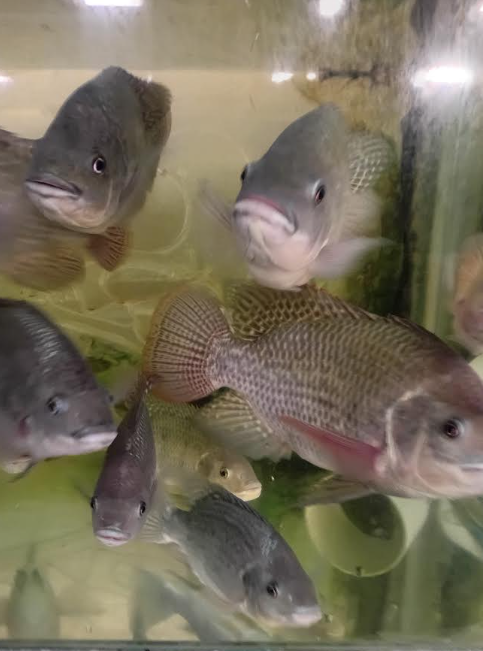
Selected SAINT broodstock
SOUTHERN AFRICAN IMPROVED NILE TILAPIA
The SAINT bloodline
SAINT is rooted in GIFT-related Nile tilapia genetics. The original WorldFish GIFT programme combined several African and domesticated family groups and applied multi-generation selection for commercially useful traits.
In 2012, Africa Tilapia Farm obtained GIFT-related material from Nam Sai Farms in Thailand, together with the independently maintained Big Nin line. Their separate breeding histories provided a broader working base. Compatible GIFT-related material was incorporated over time.
We work with smaller next-generation groups and apply close attention to phenotype and recorded performance. Exceptional A-grade fish lead selection, while suitable B-grade fish protect breeding numbers and useful diversity. Females often express growth differently from males and remain essential to the population.
The objective is repeatable farm performance: growth, body depth, health, robustness and harvest value. Genetics provides potential; temperature, oxygen, feed and husbandry determine how fully it is expressed.
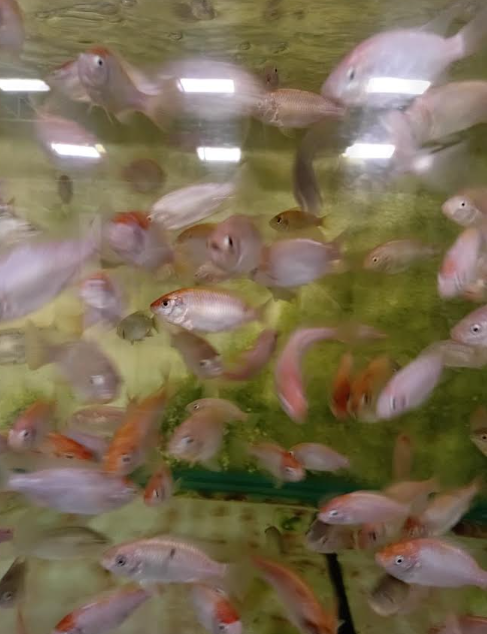
SAIMT is one of our longest-running programmes. Its structured development dates to approximately 1995, when Nile tilapia production was prohibited in South Africa and local aquaculture focused on indigenous Oreochromis mossambicus.
Early stock came through Stellenbosch University and was managed using selection principles informed by the GIFT breeding manual. The base expanded through South African farm populations and wild-origin fish from several locations.
Selection developed along the traditional blue and later red pathways while retaining a common Mozambique tilapia foundation. The programme was reduced when Nile tilapia work expanded, then strengthened shortly before COVID through the recovery of additional genetic stock.
The aim is purity, diversity and practical production value across a managed population—not dependence on one colour or one outstanding individual.
CMES grew from practical experience with biofloc and low-flow recirculation. Biofloc creates value from an active microbial water column, but excessive floc also consumes oxygen and adds pressure to the fish. CMES retains a managed microbial population while allowing excess material to be removed.
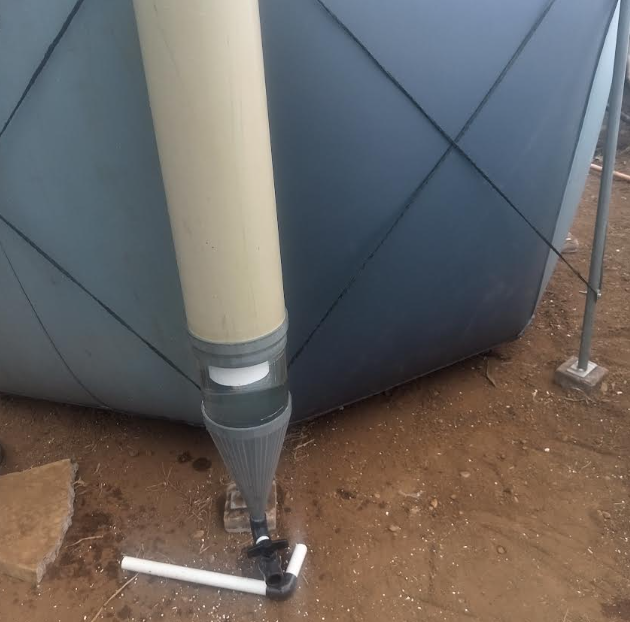
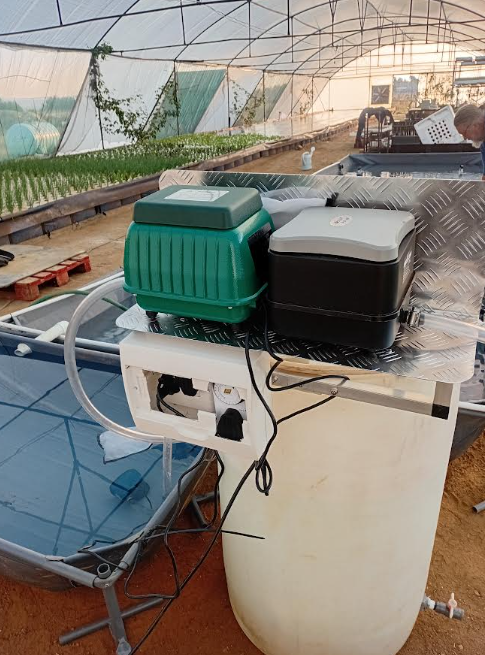
A central aeration manifold lifts water and spreads it across the surface in a mushroom circulation pattern. Waste moves towards an airlift that raises water once into the external collector; the remainder of the return path operates by gravity.
Heavier solids settle into the conical base and remain visible through the inspection section. CMES Plus adds a moving-bed sand bioreactor and secondary collector. CMES Max develops the platform into a shared-filtration RAS.
Energy efficiency does not remove the need for consistent aeration, flushing, temperature control, water monitoring and backup power.
CMES Bio uses concentrated waste from the fish system as an input to a separate plant loop. Collector material is normally harvested approximately every four days and transferred to a drum-style tea-bag mineraliser.
The bag retains solids while aeration and time release mineralised nutrients into the surrounding water. The solution enters a sump, circulates through shallow raft raceways and returns for reuse.
Keeping the fish and plant loops functionally separate gives the operator greater control and prevents untreated solids from moving through the grow beds.
Prototype operation and practical pellet development
APPLIED FEED-EXTRUSION DEVELOPMENT
Practical African feed extrusion
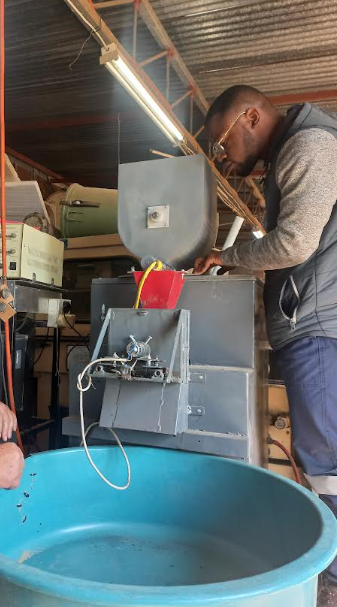
Feed can represent 50–60% of a farm’s operating expenditure. The programme therefore connects formulation, ingredient preparation, screw and barrel geometry, energy demand, pellet formation, drying and fish performance.
The UK–South Africa Knowledge Transfer Partnership brought Big Fish Systems together with the University of Johannesburg, Manchester Metropolitan University and UK support through Innovate UK. It developed prototypes, in-house machining capability and practical knowledge around segmented barrels, screws, drives and dies.
The design criteria are simplicity, energy efficiency and ease of operation. Smaller prototypes inform progressively larger platforms. Test pellets are assessed for size, consistency, density, water stability and suitability for the intended life stage.
This remains an active development programme rather than a finished commercial machine range. Prototype targets must be validated before commercial specifications are promised.
The farm must work as one biological and engineering system.
Genetics, tanks, filtration, buildings, temperature, oxygen, feed and operator skill cannot be designed independently. We start with the production outcome and work backwards to the infrastructure, fish and operating process needed to achieve it.