CMES · CMES PLUS · CMES BIO · CMES MAX
Choose the level of water control the farm actually needs.
One technology platform progressing from managed microbial production to plant-integrated nutrient recovery, cleaner hybrid filtration and full multi-tank recirculation.
DEVELOPED FROM PRACTICAL FARM OPERATION
Control the ecology. Remove the excess. Retain the value.
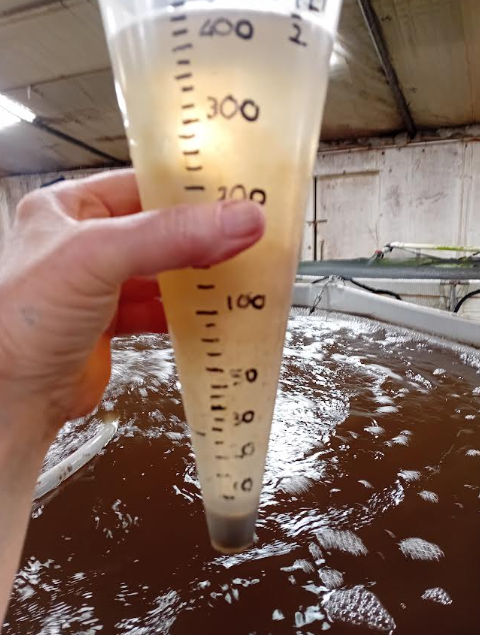
Conventional biofloc depends on a dense microbial water column. CMES develops that principle by combining vigorous aeration with controlled solids collection, allowing the operator to manage floc density instead of allowing it to build without restraint.
The platform can be expanded step by step. CMES Plus adds a biological sand reactor and polishing collector. CMES Max moves fully into a multi-tank RAS configuration.
MANAGED MICROBIAL PRODUCTION
CMES
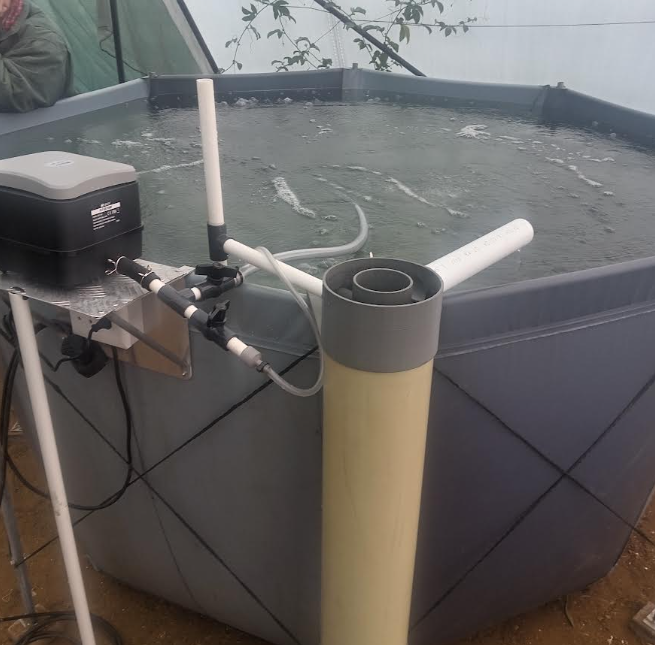
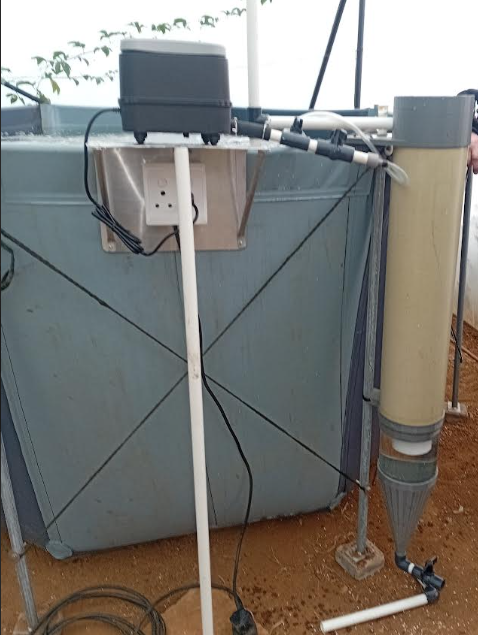
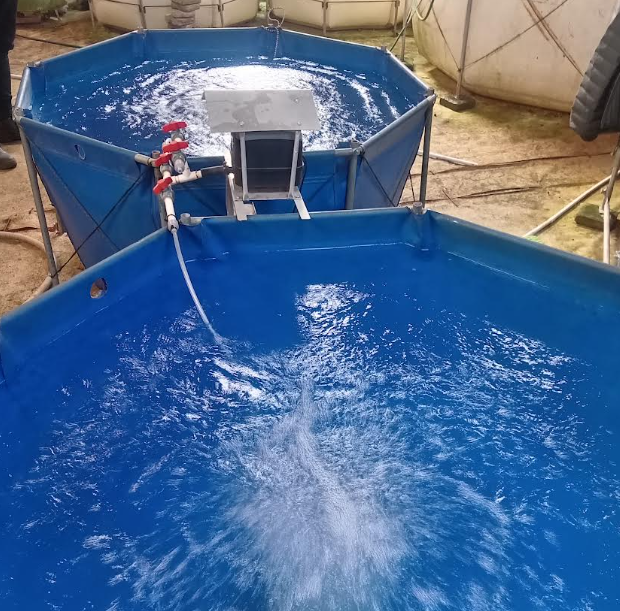
A centre aeration manifold lifts water from low in the tank and spreads it outwards at the surface. The repeated “mushroom” circulation keeps useful microbial material suspended and moves solids towards the airlift collection point.
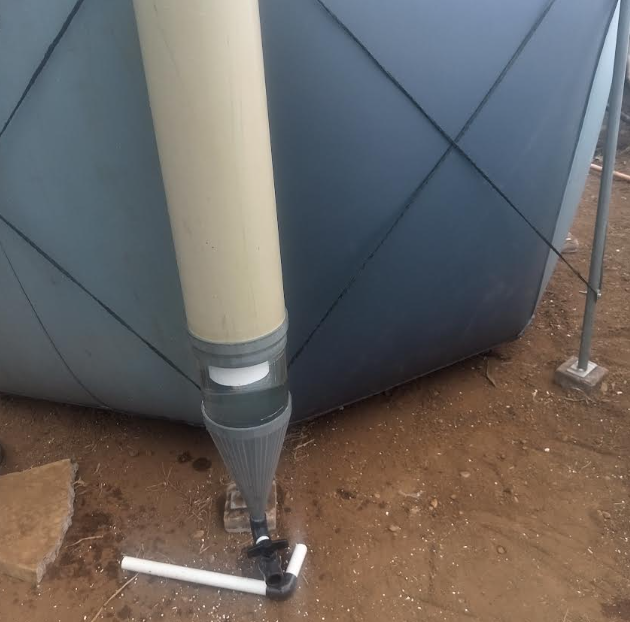
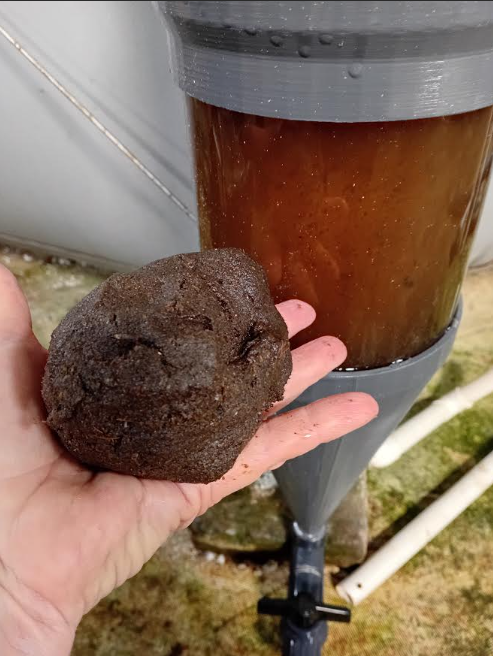
The airlift raises water over the tank edge into the external CMES collector. Heavier material settles into its conical base; clarified water rises around the internal standpipe and returns to the tank by gravity.
HYBRID CMES / RAS
CMES Plus
CMES Plus begins with the same airlift and primary settlement collector, then directs the water through a compact moving-bed sand bioreactor. Sand is continuously lifted within the reactor, exposing a large active surface to oxygenated water.
Lighter broken-down material passes to a secondary CMES collector before the treated water returns to the tank. This moves the system closer to RAS operation while retaining the low-head, air-driven philosophy.
MOVING-BED SAND BIOREACTOR
The sand is where much of the biological work happens.
Water enters low in the reactor. A central 25 mm airlift carries water and sand upwards inside the riser chamber. At the top, the heavier sand falls back into the reactor while lighter waste continues to the secondary collector.
NUTRIENT RECOVERY FOR PLANT PRODUCTION
CMES Bio
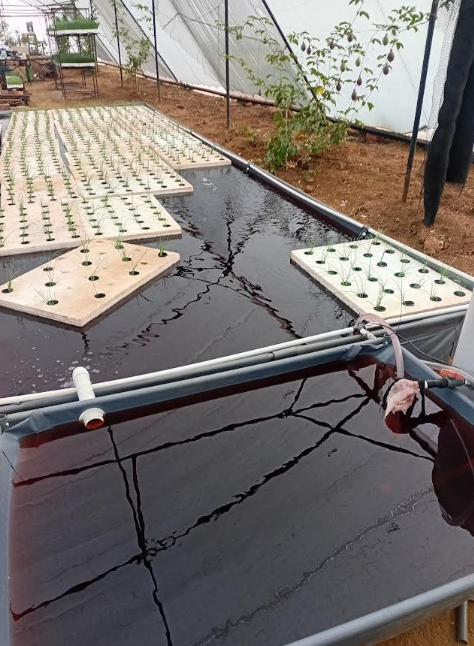
CMES Bio connects the solids-management side of the fish system to a separate plant-production loop. Waste harvested from the CMES collector approximately every four days becomes a nutrient resource instead of a disposal problem.
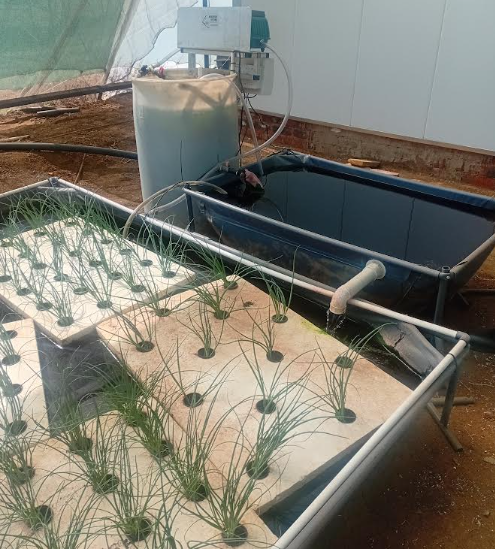
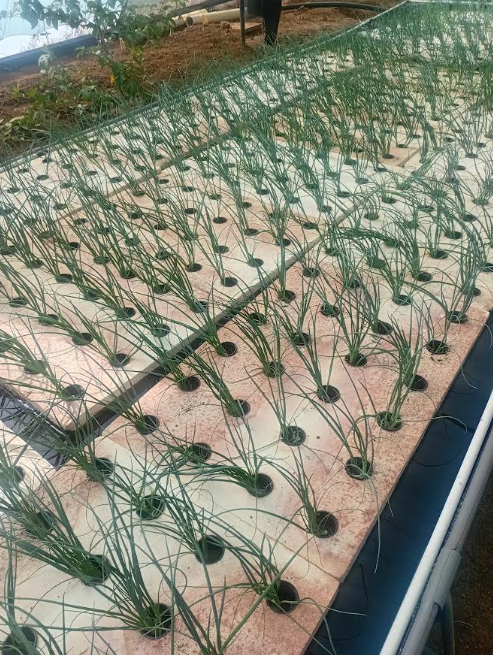
The collected material is placed in the drum-style tea-bag mineraliser. The bag retains the remaining solids while mineralised, nitrogen-rich water is released into the sump. From there, the solution circulates through shallow raft grow-bed raceways and returns to the sump for reuse.
Read the full CMES Bio story →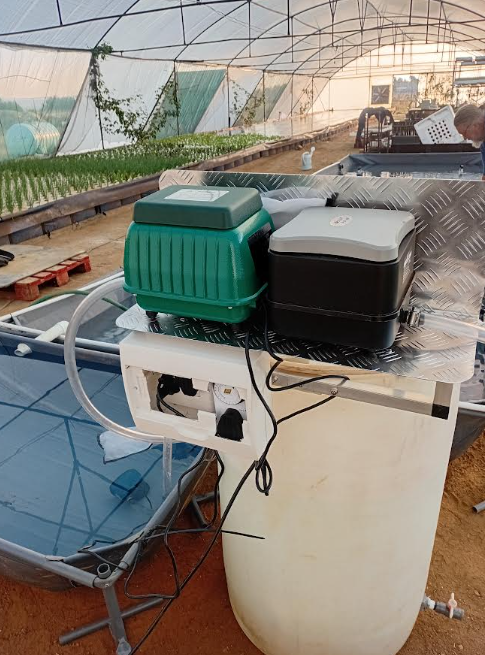
FULL RECIRCULATING AQUACULTURE
CMES Max
CMES Max is the full RAS expression of the platform. Multiple tanks can discharge to one appropriately sized filter bank. Each tank uses an airlift to establish the highest hydraulic point; water then travels through the treatment train and back to the tanks under gravity.
The exact filter bank is designed for the number of tanks, feed loading, intended biomass, water-quality objective and available backup power—not simply the water volume.
SIDE-BY-SIDE
Three levels of control—not three arbitrary packages.
The correct choice depends on biomass, feed input, water-quality target, operator ability, energy resilience and the environment surrounding the tanks.
THE OPERATING ROUTINE MATTERS
Simple maintenance must still be done consistently.
For RAS-style operation, CMES collectors are normally flushed twice each week—at our fishery, on Monday and Friday mornings. In bioponics applications the interval may be approximately four days, depending on solids loading and how the recovered material is used.
THE BUILDING IS PART OF THE BIOLOGY
No filtration system can compensate for the wrong environment.
Tilapia performance depends heavily on temperature and dissolved oxygen. Tank size, filtration and stocking figures are meaningful only when the surrounding structure, winter minimums, solar exposure, heating, ventilation and backup energy have been considered together.
That is why Big Fish Systems designs from the intended harvest backwards and matches CMES technology with the appropriate shaded tunnel, SunTrap building or insulated production space.
Start with a site and production assessment →SELECT THE SYSTEM BY OUTCOME
What biomass must the farm support?
Send the tank dimensions, species, fish size, target biomass, feed rate, water source, location and existing infrastructure. We can quote a collector, a complete tank package or a full CMES farm module.