Feed extrusion
Machine design, pellet manufacture, energy use and a practical route towards farm-scale production.
RESEARCH & DEVELOPMENT
We combine engineering, aquaculture operation, manufacturing and biological observation to move ideas from a working question to a testable prototype and, where successful, into practical production.
A PRACTICAL DEVELOPMENT PLATFORM
Feed, equipment, water treatment and genetics cannot be separated when the final measure is fish performance. Big Fish Systems leads equipment and process development, while Africa Tilapia Farm provides the living production platform and long-term genetic programmes.
Institutional collaboration adds specialist analysis, engineering support and independent scientific capability to the practical experience developed on the farm.
Machine design, pellet manufacture, energy use and a practical route towards farm-scale production.
Controlled feed variants, inclusion methods, viability testing and measurable fish response.
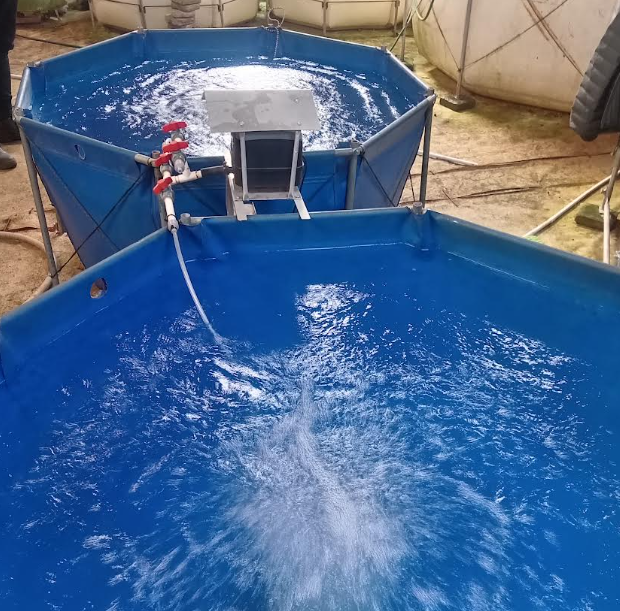
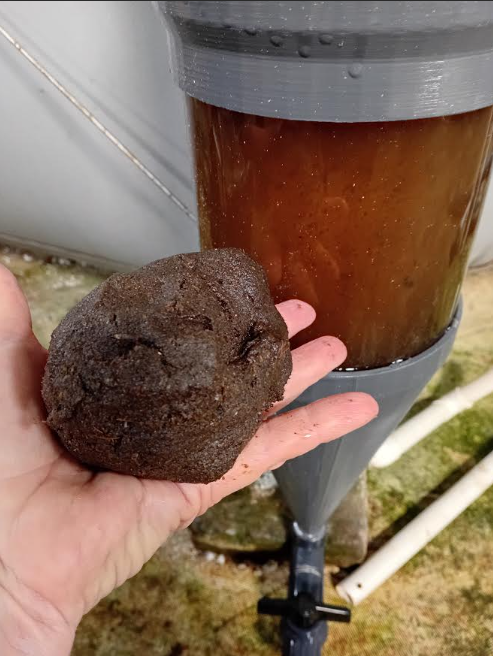
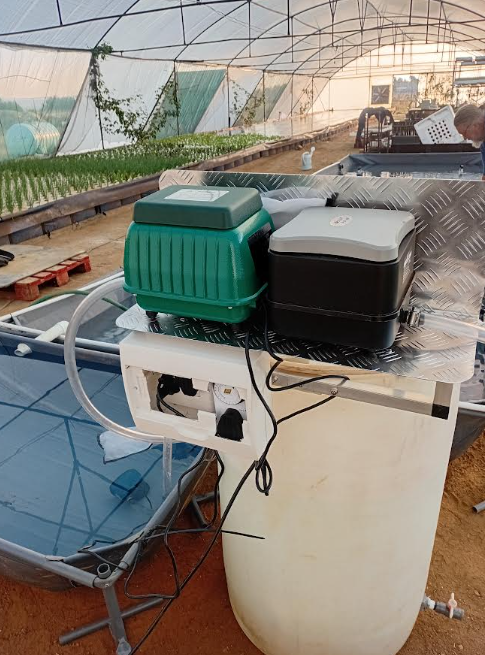
Airlift circulation, solids capture, sand bioreactors, recirculation and nutrient recovery.
Long-term selection, diversity management, production records and practical phenotype evaluation.
UK–SOUTH AFRICA KNOWLEDGE TRANSFER PARTNERSHIP
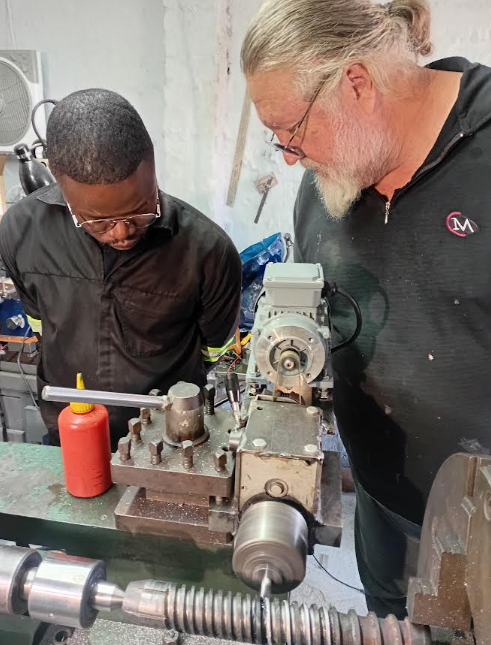
The AAKTP brought Big Fish Systems together with the University of Johannesburg, Manchester Metropolitan University and UK support through Innovate UK. The programme has developed prototypes, in-house machining ability, electrical and engineering knowledge, and a stronger route towards commercial feed-extrusion machinery.
The development path has moved from a small machine towards larger platforms, with work on screw geometry, segmented barrels, drives, dies and practical manufacturing. The long-term production objective includes a machine in the region of 500 kg/hour.
EXTRUDER DEVELOPMENT PATH
Each machine teaches the next one: material flow, compression, shear, heat, electrical load, pellet formation and ease of manufacture.
AAKTP feed-extrusion development begins with the research and engineering partnership.
Screw, barrel and drive components are redesigned and machined to improve forward movement and compression.
The next major machine transfers lessons from the smaller prototype to a higher-output design.
A practical commercial-scale output objective, subject to final engineering and validation.
CSIR PROBIOTIC FEED COLLABORATION
The trial framework compares three feeds: a standard feed without additives, the standard feed with probiotics, and a premium formulation with probiotics. This allows the effect of formulation and probiotic inclusion to be evaluated separately.
Because extrusion heat can affect viability, the work also considers testing before and after extrusion and applying probiotics after pellets have cooled where that provides the more reliable outcome.
UNIVERSITY & LABORATORY COLLABORATION
A feed’s value cannot be judged by crude protein alone. Laboratory and controlled farm work can connect pellet properties and nutrient retention with growth, health and waste loading.
CMES SYSTEM DEVELOPMENT
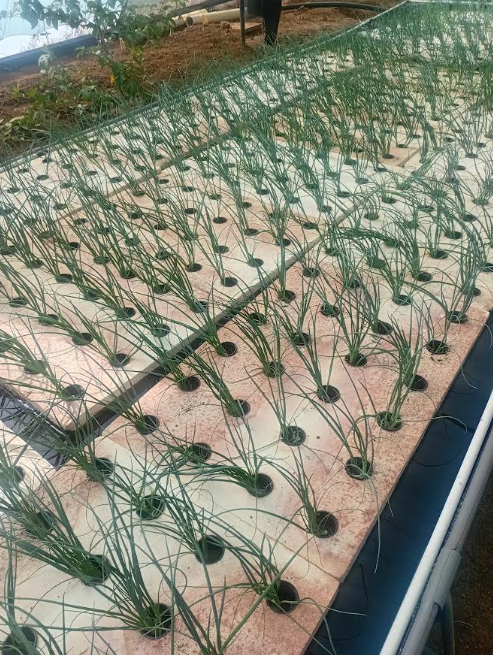
CMES began as an energy-conscious evolution of biofloc. The platform has expanded into cleaner-water and full-recirculation concepts, and into CMES Bio for recovering fish nutrients into plant production.
AFRICA TILAPIA FARM
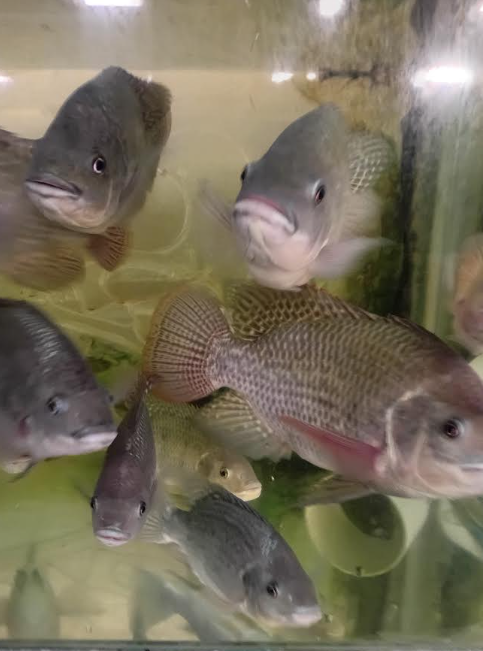
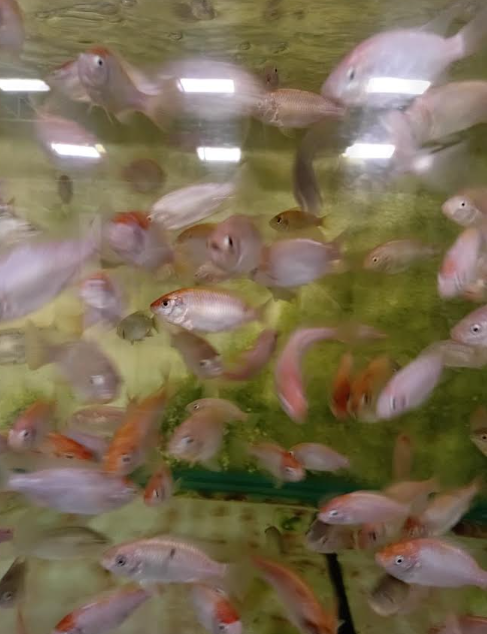
SAINT and SAIMT are maintained through selection, production records and protection of sufficient breeding diversity. The aim is not merely to identify one exceptional fish, but to build repeatable performance into future generations.
Growth, body form, health and practical farm robustness are assessed within the environment in which the fish must ultimately perform.
Explore the genetics programmes →HOW WE DEVELOP
Start with the real farm problem, production requirement or operating cost.
Create a prototype or controlled comparison that can answer the question.
Assess biological outcome, energy, maintenance, water and operator workflow.
Carry verified lessons into the next machine, system or production generation.
Targets, prototypes and preliminary production figures are not guarantees. Commercial performance depends on final validation, site conditions, temperature, water quality, genetics, feed, operator skill and management.
COLLABORATION & TECHNICAL DEVELOPMENT
We engage with research institutions, aquaculture farms and technology partners where the work has a clear practical objective and a route to measurable application.